


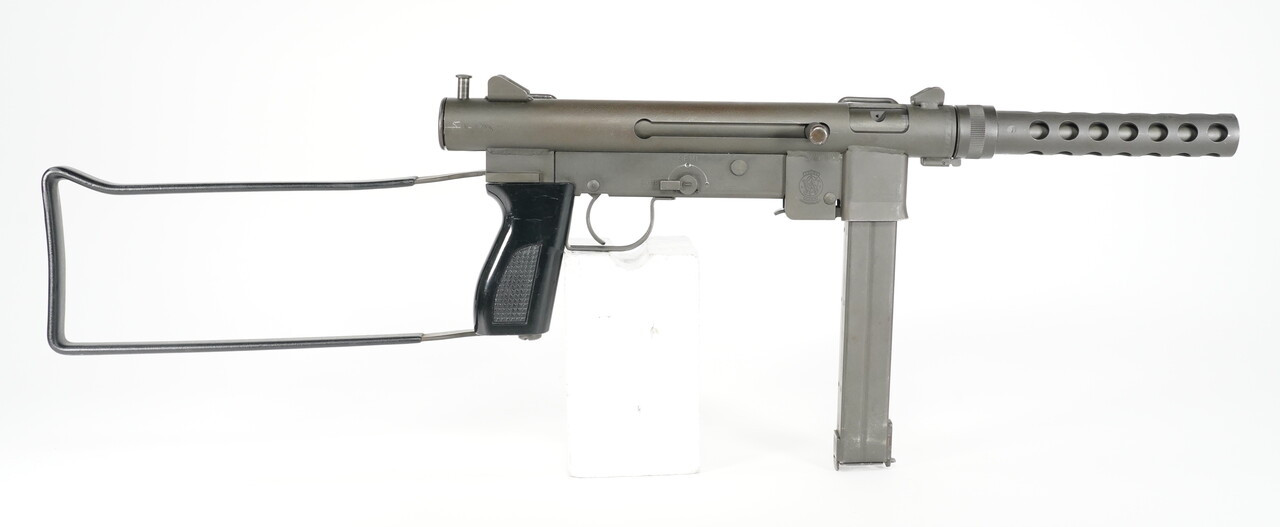


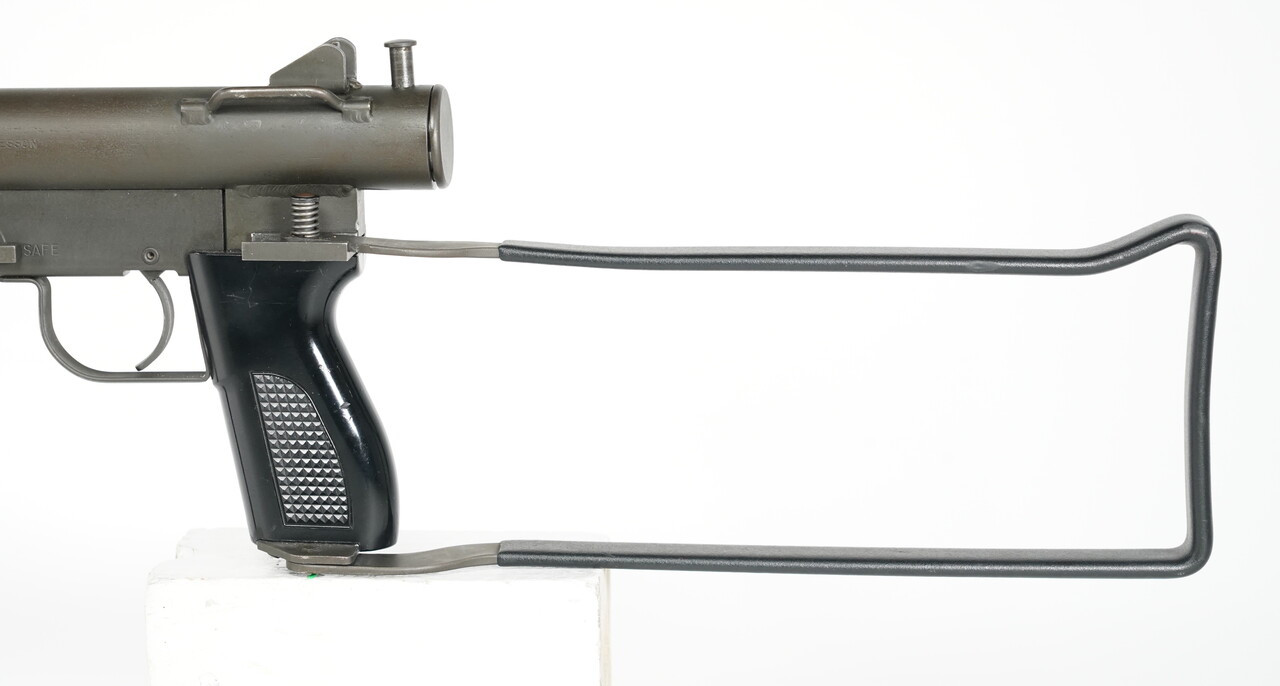
Smith and Wesson Model 76
Smith and Wesson
The history of the Model 76 submachine gun begins in April 1966, when Smith & Wesson’s district sales representative for the DC area was approached by the U.S. Navy Department about designing a 9mm submachine gun for the SEALs in Vietnam. The SEALs had regarded the Swedish Carl Gustaf m/45 as their preferred option, but Sweden, a neutral nation, objected to its use in conflict, interrupting supply.
The M76 was developed from the ground up to meet SEALs’ criteria: urgency, reliability, ruggedness, selectable fire (safe, semi-automatic, full automatic), cost-effectiveness, straightforward maintenance, a 36-round magazine, and a preferred cyclic rate of 600–800 rounds per minute. Project head Dwayne W. Charron noted that he had no prior experience with the Swedish K. The weapon, like the Carl Gustaf, fired 9mm rounds and used an open-bolt design.
SEALs specifically requested suppressors to reduce noise and muzzle flash, although some sound remained due to the open-bolt configuration. Given wartime pressure, the M76 went from concept to production in nine months, omitting cosmetic finishing to meet urgent demand.
Smith & Wesson ceased production in 1974 due to waning market demand. Nevertheless, the M76 gained fame in action films of the 1970s and 1980s, appearing in movies such as Prime Cut, The Omega Man, The Taking of Pelham One Two Three, and The Dark Knight.
SPECS:
- Designed: 1967
- Manufacturer: Smith and Wesson
- Produced: 1967-1974
- Weight: Unloaded: 7.25 lb
- Loaded: 8.75 lb
- Length: Stock folded: 22.5"
- Stock extended: 30.50"
- Barrel length: 8"
- Rate of fire: 720 rounds/min


